
On a Roll: The Changing Face of Skateboarding in Singapore
BY
CHONG XIN YING
Producer
Hype Issue #91
Published on:
Feb 13
2026
CHONG XIN YING tracks the evolution of Singapore’s skateboarding scene, from its alternative roots to its rise as a mainstream competitive sport
In the 70s and 80s, the clack of a skateboard hitting a void deck floor was often followed by a stern lecture or a call to the police. Skateboarding in Singapore was once viewed as an alternative subculture, associated with punk culture, anti-establishment attitudes, and rebellious youths. To many, it was less of a sport and more of a statement. Skaters, who took to the streets to express themselves with their skateboards, were often labelled troublemakers.
Today, that image has shifted. Since skateboarding’s debut at the Tokyo 2020 Olympic Games and its inclusion in the Thailand 2025 Southeast Asian Games, the activity has gained global recognition as a legitimate sport. In Singapore, skateparks now dot the island, and skaters range from children wobbling on their first boards to retirees cruising for leisure.
Yet, as skateboarding becomes more mainstream, questions arise about what may be lost when a sport about self-expression and individuality becomes structured and regulated.
How Skateboarding Began
Assistant Professor Ying-kit Chan from the National University of Singapore (NUS), who wrote an academic article about skateboarding in Singapore viewed through a historical lens, traces back to a time when it was just a marginalised pastime.
“In the past, skateboarding was seen as a national nuisance,” Professor Chan explained. With little to no designated space to skateboard, skaters practised urban skateboarding, turning staircases, rails, and ledges into obstacles, which many viewed as a safety hazard. This perception shaped public hostility towards skaters in the early decades.
Eddie Goh, who has been supporting the skateboarding scene with his skate shop since the 80s, recalls those early days when skaters were treated as outcasts.
“People saw [them] as rebels, maybe even gangsters,” Mr Goh said. “I wouldn’t say they want to go against the law, but [they wanted] freedom to do what [they] want … without having to comply with rules and regulations.”
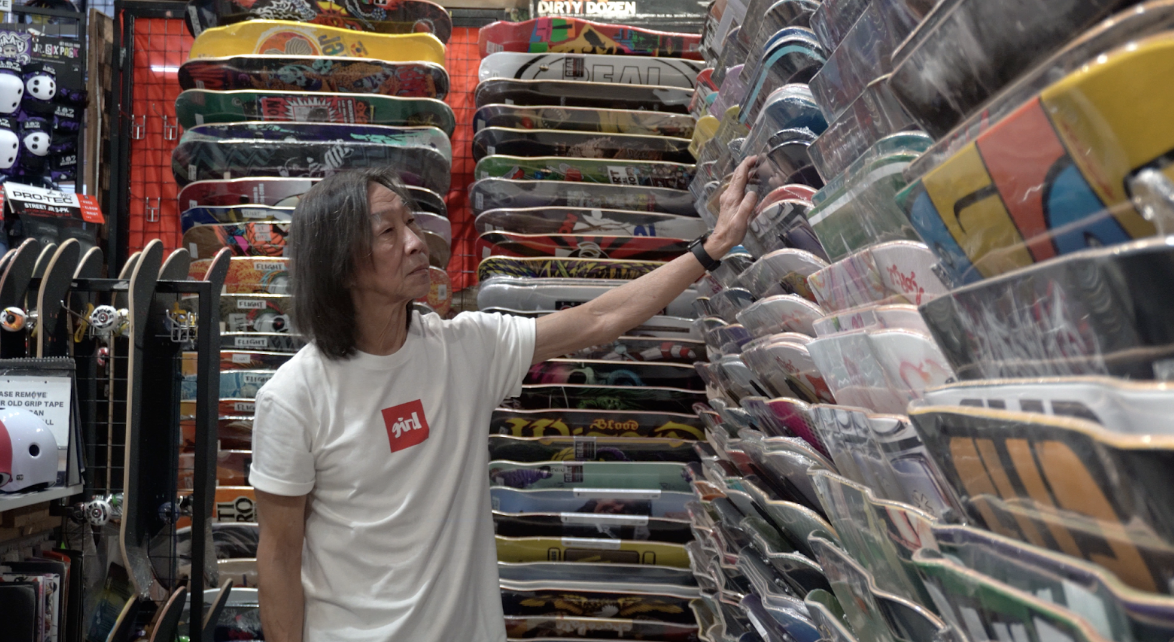
Eddie Goh looking through a shelf of skateboards. (Photo credit: Toh Shiya)
The Importance of Community
Despite being viewed by the public as nuisances, longtime skater Khairul Azree, just took the heat and rolled with it, under the influence of his elder brother. He described skateboarding as a culture built on community and inclusiveness. “We don’t care where you come from, skateboarding unites everyone. It’s a form of networking,” he emphasised. “We connect with people, [and we are] more than what people [see].”
He shared a moment that captured this spirit during his time as a commercial director for skateboarding at Decathlon. On a work trip to France, he met his boss in person for the first time. “He was so welcoming,” he said. “It was like he knew me long ago.”
For Mr Khairul, the experience reflects the global nature of skateboarding, where skaters from different walks of life instantly bond over this shared passion. “[Wherever you go], they still treat you like family in skateboarding.”
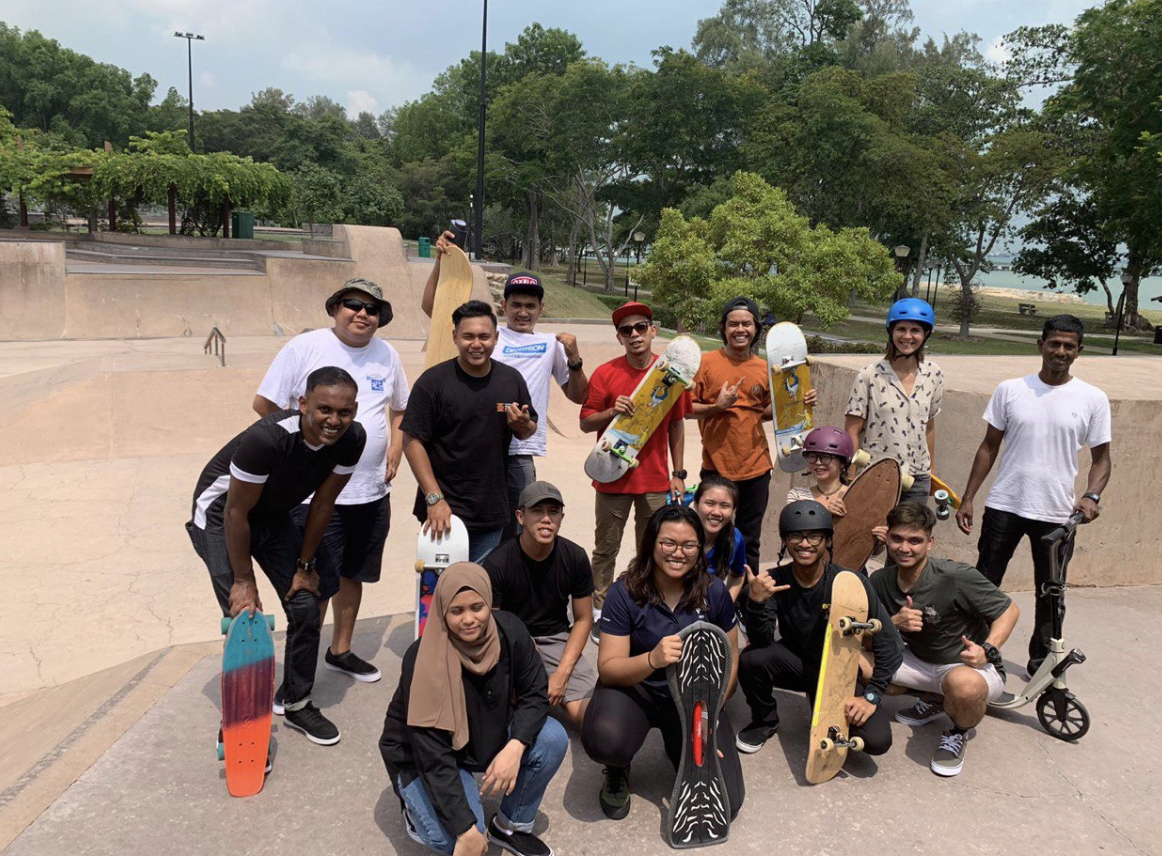
Khairul Azree (standing row, third from the right) with a group of skaters. (Photo credit: Khairul Azree)
.
Becoming Mainstream
Attitudes began to shift in the 90s, when skateboarding started rising to fame due to increases in global events, and authorities having adopted a less punitive stance towards it. The turning point for public acceptance came with international recognition. As Singaporean skaters began competing and performing well in regional and global events, skateboarding was reframed as a source of national pride.
“With more and more accomplishments being seen at such global events or competitions, you actually see Singaporeans becoming more receptive, even welcoming [it] as one of the niche sports Singaporean athletes can do well in,” Professor Chan said.
This shift has had tangible effects. Skateparks such as Somerset and East Coast Park are now popular gathering spots, and skateboarding has become more organised, with lessons, competitions and structured training pathways.
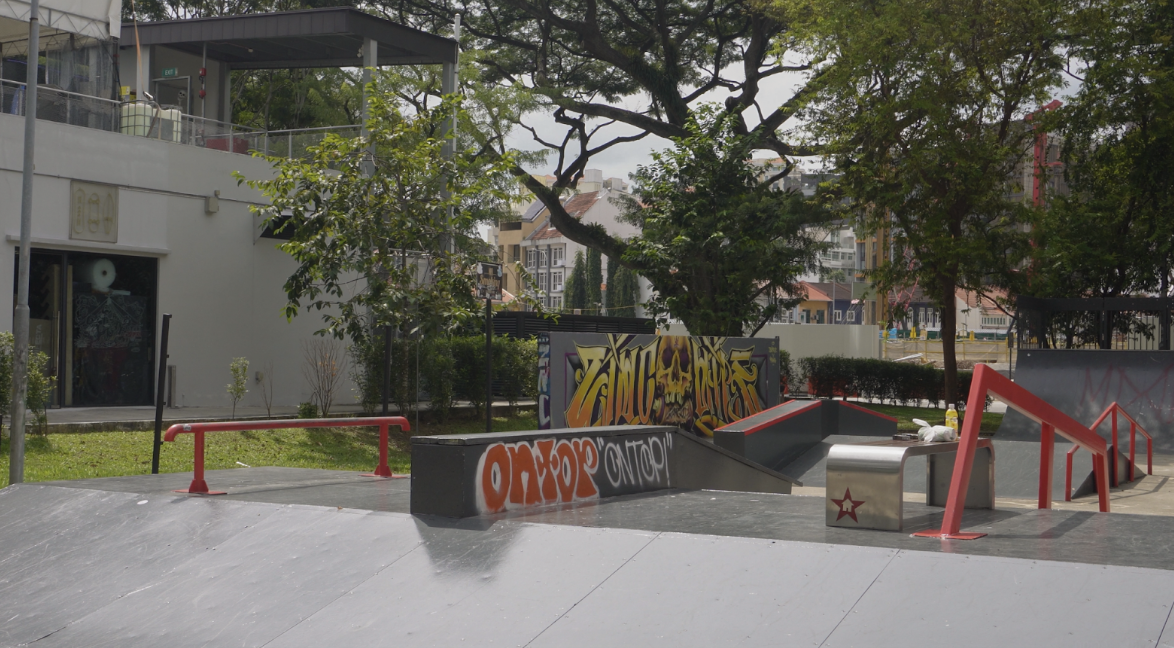
Somerset Skatepark. (Photo credit: Sarah Adriana)
.
At the same time, rules and competition formats were introduced to the sport, contributing to what Professor Chan described as the “institutionalisation” of skateboarding.
“When skateboarders are trying to compete in sporting events, naturally they will gravitate towards a certain way to perform this sport. And so it becomes more performative, and to some sceptics, it becomes very artificial.”
Mr Goh agreed with that sentiment, believing skateboarding has lost its edge now that it is mainstream. It is much easier to get into the sport, as it was no longer seen as an alternative activity. “You can skateboard, you can do football, it’s all open, easy for everybody.”
The True Essence of Skateboarding
Despite its growing status as a mainstream sport, skater culture has not disappeared. Far from it. It has diversified.
Professor Chan believes it has effectively split into two distinct groups. One group trains seriously, focusing on technique and consistency, with the aim of winning medals. The other group continues to skateboard purely for enjoyment, creativity and self-expression.
“This second group still forms the majority,” he said, noting that many skaters are not interested in competitions or rankings. Instead, they skateboard for leisure, the community, and the freedom that first drew people to the sport.
Mr Goh shared a similar perspective. While he acknowledged that greater regulation and structured competitions have “taken a bit of the fun out of it,”, he believes the essence of skateboarding ultimately lies within the individual.
“You can be yourself,” he said. “You don’t have to follow the mainstream.”
Going mainstream has not erased skateboarding’s roots. Instead, it has opened up new pathways, allowing the culture to change while the heart of skateboarding stays intact.
Skating Into the Future
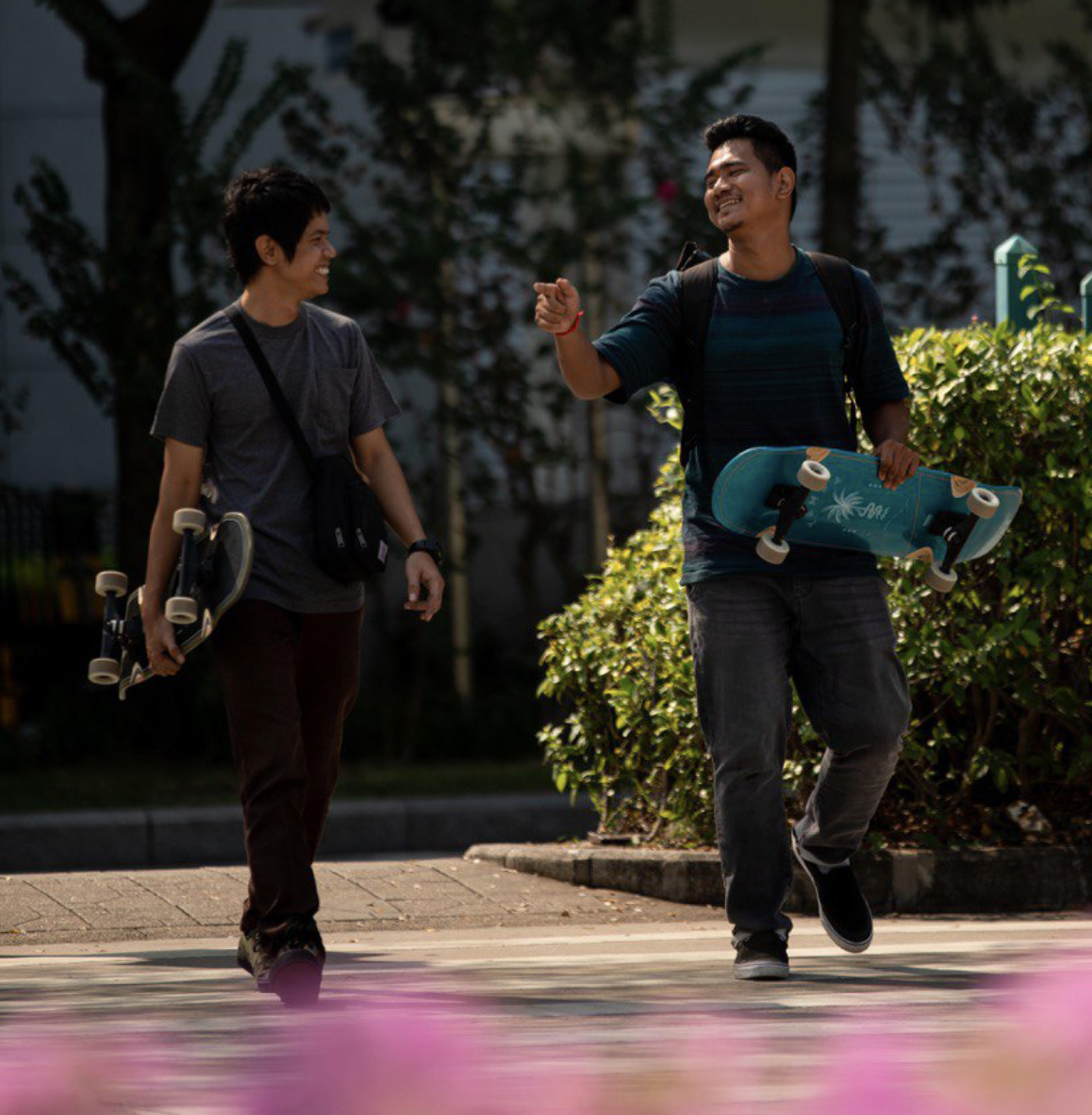
Khairul Azree (left) talking to a friend after skateboarding. (Photo credit: Khairul Azree)
.
Looking ahead, Mr Goh expressed optimism about skateboarding’s future in Singapore. “To all the skateboarders, just keep on skating and be happy. Enjoy yourself.”
For Mr Khairul, the future of skateboarding lies in its community. He hopes to see more people picking up the sport, from youngsters to older adults looking for a new form of exercise. “Just do it, and have fun,” he said, adding that stepping on a skateboard for the first time can make people feel alive, even if they fall along the way.
From void decks to international podiums, skateboarding in Singapore has come a long way. While it continues to evolve, its community, built on a shared love for the sport and inclusivity, remains firmly intact.