
Why Your Neighbourhood Mamak Shop Isn’t Giving Up Yet
BY
LEE RUO HWEE
Admin
Hype Issue #81
Published on:
Dec 26
2025
LEE RUO HWEE explores how provision shops stay innovative in keeping up with the times.
When you walk past an old-school provision shop in your neighbourhood, you are greeted by familiar sights– bread, canned drinks, maybe even that nostalgic eyeglass chocolate – all tempting you to spend your spare change. But let’s face it: these provision shops, or better known colloquially as “Mamak Shops”, have steadily dwindled over the years.
According to an article by The Straits Times, there were over 3,000 of such shops in the mid 1980s. However, only circa 250 remain today.
With supermarkets being the main outlet for groceries for many, how do these traditional Mamak shops stay alive?
Going Digital With Parcel Collection
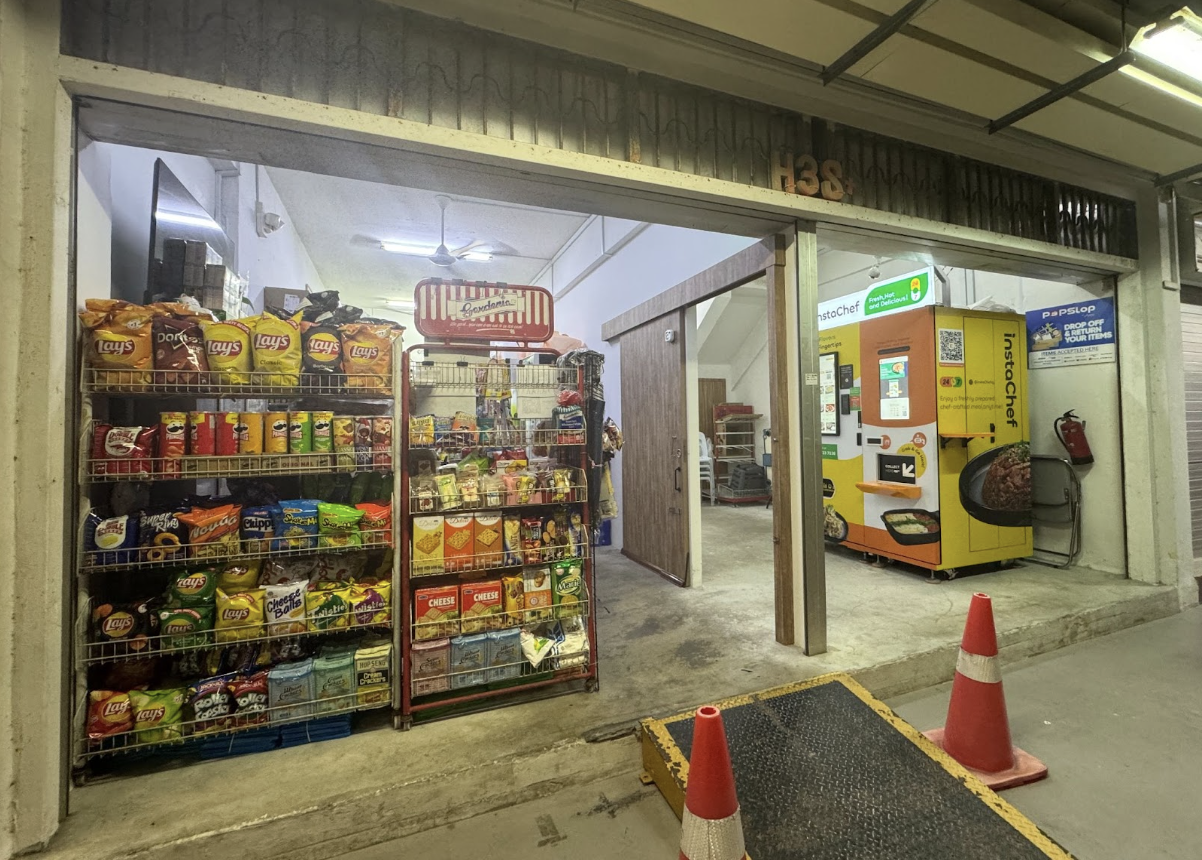
H3S+, an old school provision shop located in Hougang (Photo credits: Lee Ruo Hwee)
Just a couple bus stops away from Hougang MRT, H3S+ is tucked within the neighbourhood’s heartlands. Proudly owned by Edmund Tay and his wife, Lim Hui Hui, the couple has been running the shop together since 2018.
Mr Tay explained that the business was set up as a way for him and his wife to “slow down” in life, while still continuing to work. This decision was influenced by his declining health, caused by an accident in the past. In addition, he mentioned that Mdm Lim had long wanted to run her own Mamak shop, inspired by the one her grandmother operated at Outram Park years ago.
Along with being a Mamak shop that sells traditional products, H3S+ has adapted to changing consumer needs by doubling as a parcel collection point. For every parcel that is successfully dropped off and collected, the owners earn a commission of twenty cents.
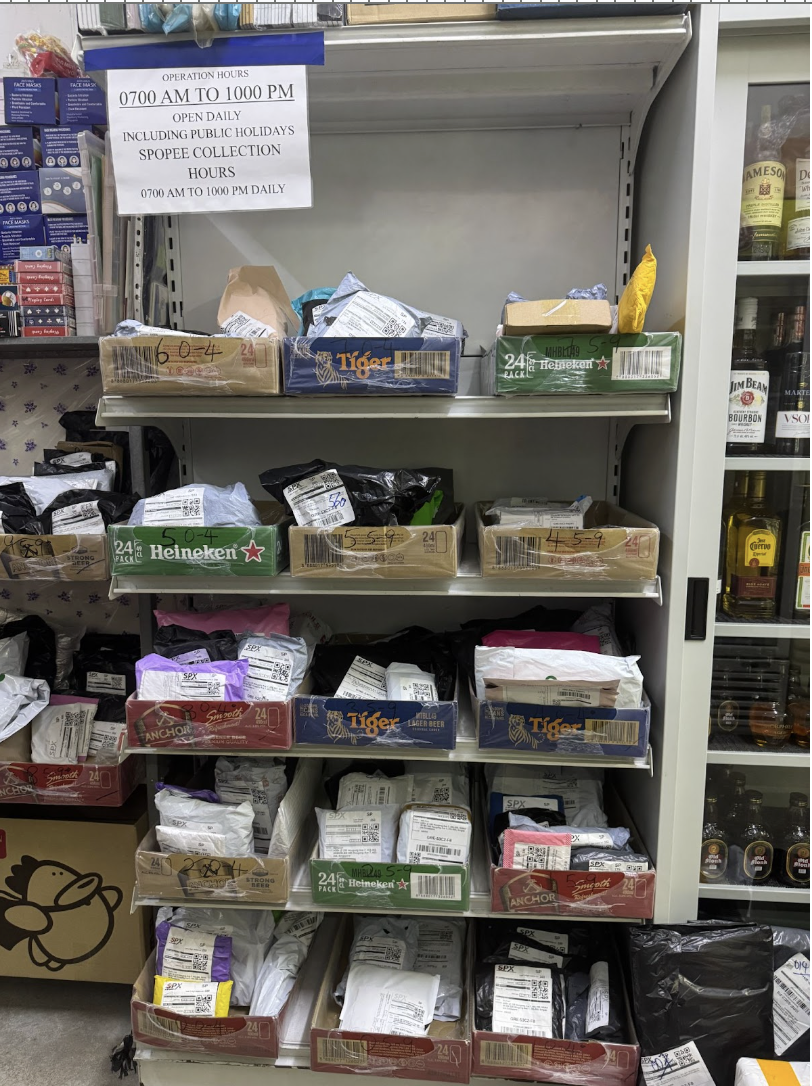
Parcels awaiting collection at H3S+ (Photo Credits: Lee Ruo Hwee)
.
“When it initially started, it was very little everyday. Like ten, twenty pieces,” Mr Tay recounted.
Originally set up as a way to attract more customers, this service proved to be more useful than expected when COVID-19 struck. Mr Tay said that business was “badly affected”, and that parcel collection served as a “lifeline” to them.
“In the second month of lockdown, all of a sudden, there’s a huge surge in all these online [orders],” said Mr Tay, who recognised a change in consumer habits.
H3S+ Meets InstaChef
Despite parcel collection being a sustainable solution, Mr Tay and Mdm Lim wanted to further push the boundaries in what Mr Tay considers to be a “sunset industry”, which refers to a long established sector that is experiencing a decline in profit and success compared to its earlier years (Cambridge Dictionary).
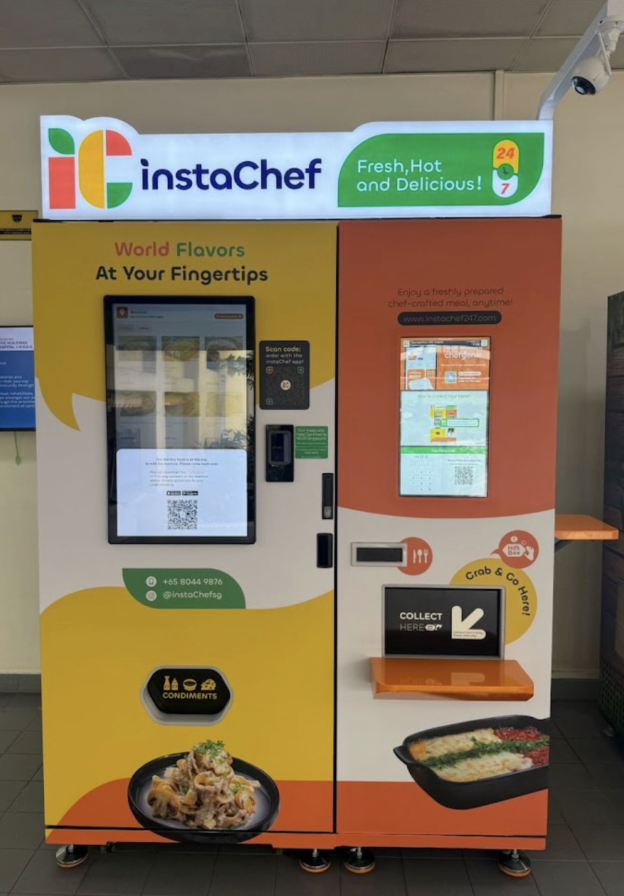
InstaChef, an AI-powered automated food vending machine (Photo Credits: InstaChef)
Earlier this year, in May 2025, Mr Tay and Mdm Lim implemented an InstaChef vending machine at H3S+. InstaChef is Singapore’s first AI-powered automated vending kitchen, aiming to serve chef-crafted, fresh meals to consumers. Found in various tertiary institutions, the machine runs 24/7, with cooked food being served within minutes.
This idea came about when Mr Tay’s customers, who visited the shop to collect their parcels, said that there were limited food options in the area. Many of these concerns typically came from adults working irregular hours.
Mr Tay explained that they started with one InstaChef machine as a trial, with the hopes that his customers would grow accustomed to the concept. He has plans to partner with more vending machine brands, but would like to give InstaChef the opportunity to gain traction among customers first.
Maintaining Traditions
With the inclusion of an autonomous vending machine, striking a balance between preserving tradition and keeping pace with change can be challenging. To tackle this, Mr Tay
and Mdm Lim made the bold decision to renovate their shop, adding a partition to separate the vending machine from the shop area.
“We wanted to keep the feel of the old provision shop but at the same time, we want to bring in new business ventures, new ideas to sustain our business,” said Mr Tay.
“Eventually, we’re not going to survive as an old school mamak shop,” Mr Tay admitted. However, he believes that this is a business risk he has to take. To him, failure is not something to fuss over– what truly matters is the courage to venture.
Beyond the shop’s physical layout, H3S+ has preserved the “Kampung spirit” that Mamak shops are known for. They have placed a table outside the shop, serving as a gathering point for neighbours. On some evenings, the space turns into a wholesome potluck session, fostering a strong sense of community over shared meals.
So, don’t make the assumption that all Mamak shops are your typical old school vendors selling mere groceries and necessities. These staples may be old in name, but with a little bit of innovation, it shows that tradition and modernity can coexist under the same roof.
Give it a try, step inside your nearest Mamak shop, and you might discover something that piques your interest.
https://shorturl.fm/nTfgG
Pornhub: Free Porn Videos & Sex Movies – Porno, XXX, Porn Tube pornhub Pornhub: Free Porn Videos & Sex Movies – Porno, XXX, Porn Tube
Deluxe Promosyon | 2026 Promosyon ürünleri eşantiyon hediyelik, ajanda 2025, promosyon ucuz, hızlı promosyon ürünü, kalem yapımı promosyon
naturally like your web site however you need to take a look at the spelling on several of your posts. A number of them are rife with spelling problems and I find it very bothersome to tell the truth on the other hand I will surely come again again.
This content is really helpful, especially for beginners like me.
Düzce Egemer Mermer Granit Belenco tezgah seçenekleri arasından ihtiyacımıza en uygun olanı rahatlıkla seçebildik. https://egemermergranit.com.tr/
I’m often to blogging and i really appreciate your content. The article has actually peaks my interest. I’m going to bookmark your web site and maintain checking for brand spanking new information.
Kuvars tezgah tercihimizde yapılan yönlendirmeler ve Düzce Egemer Mermer Granit sayesinde mutfağımız daha şık ve dengeli bir görünüme kavuştu. https://egemermergranit.com.tr/
In the world of download free action games for pc, players are always searching for better experiences, especially when they try to gaming news today from trusted sources. Many gamers explore different genres such as best open world games 2025 pc or even deep story-based new free games for android download to discover new entertainment. As the demand grows, the trend of multiplayer online games continues to shape the gaming community and attract more users every day.
Many people today are increasingly interested in subjects like Artificial intelligence because of their major influence on global technology and financial systems. At the same time, the rise of markets such as Insurance attracts individuals who want to explore new opportunities and learn how digital economies operate. Others choose to study areas like Forex to understand long‑term strategies, risk management, and potential growth across different sectors.
AI TOOLS
You’re doing a fantastic job with this blog.
Şömine kaplama çalışması estetik açıdan mekânla uyumlu ve oldukça özenliydi. Düzce Egemer Mermer Granit https://egemermergranit.com.tr/
This was exactly what I was searching for. Thanks a lot!
This topic is so relevant right now. Thanks for the timely post.
Düzce Egemer Mermer Granit Akrilik tezgah uygulaması temiz işçilikle tamamlandı ve ortaya çıkan sonuç oldukça memnun ediciydi.https://egemermergranit.com.tr/
Awesome! Its genuinely remarkable post, I have got much clear idea regarding from this post
There is definately a lot to find out about this subject. I like all the points you made https://heosexhay.net/
Great information shared.. really enjoyed reading this post thank you author for sharing this post .. appreciated
Best places to visit in Turkey Super friendly guide and driver! https://mobilephones.repair/?p=50296
Düzce Egemer Mermer Granit’ten yaptırdığımız porselen tezgah hem görünüm hem de kullanım açısından beklentimizin üzerinde oldu.https://egemermergranit.com.tr/
I like the efforts you have put in this, regards for all the great content.
Awesome! Its genuinely remarkable post, I have got much clear idea regarding from this post
Wonderful post — practical and well-researched. Subscribed!
websitem için çok işime yaradı teşekkür ederim
Great post — concise, useful, and well-presented. Thank you!
Pretty! This has been a really wonderful post. Many thanks for providing these details.
Very well presented. Every quote was awesome and thanks for sharing the content. Keep sharing and keep motivating others.
Istanbul tour from Pamukkale Jacob W. Hot air ballooning should be on everyone’s bucket list. https://benhvientriducthanh.vn/?p=4630
Nice article! I especially liked the actionable checklist.
Appreciate the time you put into this — it’s packed with value.
You’re so awesome! I don’t believe I have read a single thing like that before. So great to find someone with some original thoughts on this topic. Really.. thank you for starting this up. This website is something that is needed on the internet, someone with a little originality!
https://shorturl.fm/0T5XE
I love the practical tips in this post. Can you recommend further reading?
Good post! We will be linking to this particularly great post on our site. Keep up the great writing
I appreciate the honesty in your assessment — refreshing to see.
Düzce Egemer Mermer Granit Cimstone tezgah montajı zamanında yapıldı ve ölçü hassasiyeti gerçekten çok iyiydi. https://egemermergranit.com.tr/
https://shorturl.fm/FJWTg
Awesome stuff! Saving this. I�m from Yakutia. Would be glad to exchange links!
Thank you for the helpful information.
This is now one of my favorite blog posts on this subject.
Düzce Egemer Mermer Granit Belenco tezgah seçenekleri arasından ihtiyacımıza en uygun olanı rahatlıkla seçebildik. https://egemermergranit.com.tr/
I very delighted to find this internet site on bing, just what I was searching for as well saved to fav https://heosexhay.net/
Karahayit hot springs Amazing customer support! I messaged at midnight with a question and got a reply in 10 minutes. The hotel in Alanya was beautiful, renovated rooms, great animation team, and delicious cocktails. Everything was exactly as promised. Highly recommend! https://anandinstitutebhopal.com/?p=62840
Düzce Egemer Mermer Granit’ten yaptırdığımız porselen tezgah hem görünüm hem de kullanım açısından beklentimizin üzerinde oldu.https://egemermergranit.com.tr/
https://shorturl.fm/s1uRR
For the reason that the admin of this site is working, no uncertainty very quickly it will be renowned, due to its quality contents.
What a great resource. I’ll be referring back to this often.
Really insightful post — Your article is very clearly written, i enjoyed reading it, can i ask you a question? you can also checkout this newbies in seo
Your passion for the topic really shines through.
Awesome! Its genuinely remarkable post, I have got much clear idea regarding from this post
naturally like your web site however you need to take a look at the spelling on several of your posts. A number of them are rife with spelling problems and I find it very bothersome to tell the truth on the other hand I will surely come again again.
dxd global | Marka yönetimi Kıbrıs , sosyal medya yönetimi, promosyon ürünleri, Seslendirme Hizmeti , SEO , Dijital pazarlama , Videografi
Kariyer KKTC | Kıbrıs iş ilanları iş ilanları , öğrenciler için iş ilanları, Kıbrıs staj ,iş ilanları Kıbrıs , KKTC ücretsiz destek , KKTC online iş ilanları
I like the efforts you have put in this, regards for all the great content.
naturally like your web site however you need to take a look at the spelling on several of your posts. A number of them are rife with spelling problems and I find it very bothersome to tell the truth on the other hand I will surely come again again.
Really great read — I appreciate how clearly you explained the importance of local online presence for businesses today. It’s a topic many companies overlook, i find it very interesting and very important topic. can i ask you a question? also we are recently checking out this newbies in the webdesign industry., you can take a look . waiting to ask my question if allowed. Thank you
Pamukkale hot springs swimming Amazing experience with a 7-night stay in Lara Kundu. The ultra all-inclusive concept was outstanding – unlimited premium drinks, à la carte restaurants every night, and live music. TravelShop gave us the best rate and VIP treatment. Thank you! https://yalla-kurd.com/?p=12262
Adventure activities Pamukkale The tour was better than expected. Friendly staff and great locations. https://shemirancenter.com//?p=5642
. thank you
There is definately a lot to find out about this subject. I like all the points you made
I wasn’t sure what to expect at first, but this turned out to be surprisingly useful. Thanks for taking the time to put this together.
Full day Antalya from Pamukkale The pick-up and drop-off were punctual. https://nextcurepharma.com?p=3171
. thank you
Antalya tour from Pamukkale Noah S. ★★☆☆☆ Luxury cave hotel pool was under renovation (not mentioned at booking). Disappointed after 12hr flight. https://web-schreibfeder.de?p=4775
I do not even understand how I ended up here, but I assumed this publish used to be great
Group tours Pamukkale Travelshop Booking delivered an exceptional travel day filled with beautiful sights and excellent service. Everything was arranged with great care, from the pick-up time to the final drop-off. The guide was knowledgeable and approachable, always ready to help and provide explanations. The pace of the tour felt perfect, allowing us to enjoy every moment without rushing. I genuinely admire the professionalism of this company and highly recommend their tours to others. https://cottoecrudo.it/?p=31465
I just like the helpful information you provide in your articles
Düzce Egemer Mermer Granit Akrilik tezgah uygulaması temiz işçilikle tamamlandı ve ortaya çıkan sonuç oldukça memnun ediciydi.https://egemermergranit.com.tr/
Really great read — I appreciate how clearly you explained the importance of local online presence for businesses today. It’s a topic many companies overlook, i find it very interesting and very important topic. can i ask you a question? also we are recently checking out this newbies in the webdesign industry., you can take a look . waiting to ask my question if allowed. Thank you
Thank you for the update. Great site layout. Greetings from Yakutsk! Let’s consider a link exchange.
Cultural tours Turkey Miguel S. ★★★☆☆ ATV sunset tour needs better safety gear. Loved the adrenaline rush but returned covered in dust. Provide masks next time! https://www.artcogalleryhk.com/?p=3094
becem travel | Kıbrıs araç transfer Kıbrıs araç kiralama , Kıbrıs vip araç , Kıbrıs araç transfer , Kıbrıs güvenli ulaşım
Deluxe Promosyon | 2026 Promosyon ürünleri eşantiyon hediyelik, ajanda 2025, promosyon ucuz, hızlı promosyon ürünü, kalem yapımı promosyon
Very well presented. Every quote was awesome and thanks for sharing the content. Keep sharing and keep motivating others.
https://urbanreality.com.ng/product/land-for-sale-in-abuja-city-of-love/
. thank you
Kariyer KKTC | Kıbrıs iş ilanları iş ilanları , öğrenciler için iş ilanları, Kıbrıs staj ,iş ilanları Kıbrıs , KKTC ücretsiz destek , KKTC online iş ilanları
Group tours Pamukkale Just had the most luxurious week in Antalya’s Lara Kundu area. TravelShop booked us into a brand new 6-star hotel – private pavilion with pool, butler service, Michelin-level dining. Felt like royalty. Worth every penny and more! https://thnexapoint.com?p=1125
QQ88Pk Com nhà cái cá cược uy tín hàng đầu châu Á.
Turkey tour discounts A great company that truly cares about guests. https://thebrooklynbazaar.com/?p=6388
Thanks for the value. Definitely keeping this.
Nice post. I learn something totally new and challenging on websites
becem travel | Kıbrıs araç transfer Kıbrıs araç kiralama , Kıbrıs vip araç , Kıbrıs araç transfer , Kıbrıs güvenli ulaşım
Deluxe Promosyon | 2026 Promosyon ürünleri eşantiyon hediyelik, ajanda 2025, promosyon ucuz, hızlı promosyon ürünü, kalem yapımı promosyon
This is very practical and well-presented.
This topic really needed to be talked about. Thank you.
Thanks for making this so reader-friendly.
https://shorturl.fm/koQ7Z
What an engaging read! You kept me hooked from start to finish.
This is my first time pay a quick visit at here and i am really happy to read everthing at one place
Thanks for addressing this topic—it’s so important.
Thank you for making this topic less intimidating.
Great article! I’ll definitely come back for more posts like this.
I find this extremely useful. Saving it now.
You clearly know your stuff. Great job on this article.
https://shorturl.fm/wyyW9
Really great read — I appreciate how clearly you explained the importance of local online presence for businesses today. It’s a topic many companies overlook, i find it very interesting and very important topic. can i ask you a question? also we are recently checking out this newbies in the webdesign industry., you can take a look . waiting to ask my question if allowed. Thank you
This perspective contributes meaningfully to the broader narrative.
I love how well-organized and detailed this post is.
QQ88 Casino mang đến không gian cá cược hiện đại với dealer live chuyên nghiệp, tỷ lệ thưởng cạnh tranh và hệ thống bảo mật cao cấp dành cho người chơi sành giải trí.
Really insightful post — Your article is very clearly written, i enjoyed reading it, can i ask you a question? you can also checkout this newbies in seo. thank you
Really great read — I appreciate how clearly you explained the importance of local online presence for businesses today. It’s a topic many companies overlook, i find it very interesting and very important topic. can i ask you a question? also we are recently checking out this newbies in the webdesign industry., you can take a look . waiting to ask my question if allowed. Thank you
qq887p.com cập nhật tên miền mới, do mấy th kìa nó trỏ SA nhiều quá. Vô đây mà chơi cá cược casino để nhận 88K ưu đãi nạp đầu. ĐKM mấy con lợn trỏ trùng đuổi t
https://shorturl.fm/hporw
QQ88 – nhà cái cá cược trực tuyến uy tín, cung cấp casino live, nổ hũ, bắn cá và thể thao với hệ thống bảo mật cao, thanh toán nhanh.
1
QQ88 là thương hiệu cá cược trực tuyến được yếu thích hàng đầu, mang đến kho game ấn tượng như casino, bắn cá, nổ hũ, đá gà,… tham gia ngay hôm nay!
QQ88 là nhà cái cá cược trực tuyến uy tín, cung cấp casino live, nổ hũ, bắn cá và thể thao với trải nghiệm mượt, bảo mật cao.
https://shorturl.fm/4u1LQ
QQ88 mang đến hệ sinh thái cá cược trực tuyến toàn diện, tích hợp casino live, slot đổi thưởng, bắn cá và thể thao vận hành mượt mà.
https://shorturl.fm/6El1q
Actually, I was looking for antibiotics fast and discovered a great source. It allows you to order meds no script legally. In case of a bacterial infection, try here. Discreet packaging to USA. Check it out: visit website. Hope you feel better.
QQ88 là nền tảng cá cược trực tuyến uy tín, cung cấp casino live, nổ hũ, bắn cá và thể thao với hệ thống vận hành ổn định.
Actually, I needed Doxycycline without waiting and discovered this amazing site. They let you get treatment fast securely. For treating a toothache, this is the best place. Discreet packaging guaranteed. More info: read more. Cheers.
我們的彩券行專家團隊每日更新各大聯盟的比賽分析,包括NBA、MLB、中華職棒等。
Thi is a great article no doubt about it, i just started following you and i enjoy reading this piece. Do you post often ? we have similar post on the german best freelancer platform called https://webdesignfreelancerdeutschland.de/ you can check it out if you want. Thank you
Thi is a great article no doubt about it, i just started following you and i enjoy reading this piece. Do you post often ? we have similar post on the german best freelancer platform called https://webdesignfreelancerdeutschland.de/ you can check it out if you want. Thank you
Thi is a great article no doubt about it, i just started following you and i enjoy reading this piece. Do you post often ? we have similar post on the german best freelancer platform called https://webdesignfreelancerdeutschland.de/ you can check it out if you want. Thank you
п»їRecently, I wanted to buy Doxycycline urgently and came across this amazing site. It allows you to purchase generics online legally. If you have strep throat, check this shop. Overnight shipping to USA. Go here: online antibiotics pharmacy. Highly recommended.
Thi is a great article no doubt about it, i just started following you and i enjoy reading this piece. Do you post often ? we have similar post on the german best freelancer platform called https://webdesignfreelancerdeutschland.de/ you can check it out if you want. Thank you
Lately, I wanted to get Amoxicillin urgently and came across this reliable site. It offers Amoxicillin 500mg overnight. If you are in pain, check this out: amoxicillin 500mg price. Hope it helps.
Thi is a great article no doubt about it, i just started following you and i enjoy reading this piece. Do you post often ? we have similar post on the german best freelancer platform called https://webdesignfreelancerdeutschland.de/ you can check it out if you want. Thank you
Interesting take on maximizing returns! Seeing platforms like juan 365ph slot download really elevate the VIP experience with secure onboarding – crucial for serious players. Strategy & security go hand-in-hand, don’t they?
sjktzrxovzjgkytsuxjwhkepkonkof
QQ88 là nền tảng cá cược trực tuyến uy tín, tích hợp casino live, nổ hũ, bắn cá và thể thao với trải nghiệm ổn định.
Thi is a great article no doubt about it, i just started following you and i enjoy reading this piece. Do you post often ? we have similar post on the german best freelancer platform called https://webdesignfreelancerdeutschland.de/ you can check it out if you want. Thank you
Thi is a great article no doubt about it, i just started following you and i enjoy reading this piece. Do you post often ? we have similar post on the german best freelancer platform called https://webdesignfreelancerdeutschland.de/ you can check it out if you want. Thank you
我們的台灣運彩專家團隊每日更新各大聯盟的比賽分析,包括NBA、MLB、中華職棒等。
Yeni Pin Up giriş ünvanını axtarırsınızsa, bura baxa bilərsiniz. İşlək link vasitəsilə qeydiyyat olun və qazanmağa başlayın. Xoş gəldin bonusu sizi gözləyir. Keçid: rəsmi sayt uğurlar.
2026 yılında popüler olan casino siteleri hangileri? Cevabı web sitemizde mevcuttur. Deneme bonusu veren siteleri ve yeni adres linklerini paylaşıyoruz. İncelemek için https://cassiteleri.us.org/# siteyi incele kazanmaya başlayın.
Aktual Pin Up giriş ünvanını axtarırsınızsa, bura baxa bilərsiniz. Bloklanmayan link vasitəsilə hesabınıza girin və oynamağa başlayın. Xoş gəldin bonusu sizi gözləyir. Keçid: Pin Up kazino qazancınız bol olsun.
Aktual Pin Up giriş ünvanını axtarırsınızsa, bura baxa bilərsiniz. İşlək link vasitəsilə qeydiyyat olun və qazanmağa başlayın. Xoş gəldin bonusu sizi gözləyir. Keçid: sayta keçid qazancınız bol olsun.
Canlı casino oynamak isteyenler için kılavuz niteliğinde bir site: https://cassiteleri.us.org/# güvenilir casino siteleri Hangi site güvenilir diye düşünmeyin. Onaylı bahis siteleri listesi ile rahatça oynayın. Detaylar linkte.
Bocoran slot gacor malam ini: mainkan Gate of Olympus atau Mahjong Ways di Bonaslot. Situs ini anti rungkad dan aman. Bonus new member menanti anda. Akses link: slot gacor dan menangkan.
Aktual Pin Up giriş ünvanını axtarırsınızsa, doğru yerdesiniz. Bloklanmayan link vasitəsilə hesabınıza girin və oynamağa başlayın. Xoş gəldin bonusu sizi gözləyir. Keçid: Pin-Up Casino hamıya bol şans.
Bu sene en çok kazandıran casino siteleri hangileri? Cevabı web sitemizde mevcuttur. Bedava bahis veren siteleri ve güncel giriş linklerini paylaşıyoruz. Hemen tıklayın kaçak bahis siteleri kazanmaya başlayın.
Canlı casino oynamak isteyenler için kılavuz niteliğinde bir site: türkçe casino siteleri Hangi site güvenilir diye düşünmeyin. Editörlerimizin seçtiği casino siteleri listesi ile rahatça oynayın. Detaylar linkte.
Trải nghiệm giải trí online tại QQ88 với kho game đa dạng, giao diện tối ưu, vận hành mượt, hỗ trợ 24/7 và môi trường cá cược an toàn.
2026 yılında en çok kazandıran casino siteleri hangileri? Cevabı web sitemizde mevcuttur. Deneme bonusu veren siteleri ve güncel giriş linklerini paylaşıyoruz. İncelemek için listeyi gör fırsatı kaçırmayın.
Aktual Pin Up giriş ünvanını axtarırsınızsa, doğru yerdesiniz. İşlək link vasitəsilə qeydiyyat olun və qazanmağa başlayın. Pulsuz fırlanmalar sizi gözləyir. Keçid: https://pinupaz.jp.net/# sayta keçid uğurlar.
Bu sene popüler olan casino siteleri hangileri? Cevabı platformumuzda mevcuttur. Deneme bonusu veren siteleri ve yeni adres linklerini paylaşıyoruz. Hemen tıklayın https://cassiteleri.us.org/# bonus veren siteler kazanmaya başlayın.