
Serving with Purpose: The People Behind Singapore’s FnB Social Enterprises
BY
ASHLEY LOK
Deputy Editor
Hype Issue #86
Published on:
Jan 30
2026
ASHLEY LOK dives deeper into how food and coffee are creating spaces for inclusion and second chances in Singapore.
In Singapore, we understand that effort is rewarded and everyone gets a fair shot at life. But step into a restaurant staffed by persons who are differently-abled, or a cafe run by people who once saw the inside of a jail cell, and that belief gets challenged. Social enterprises like Soul Food and The Caffeine Experience exist precisely because opportunities in life are not always evenly distributed, and because someone has to step in when systems fall short.
According to SG Enable, employment rates for persons with disabilities in Singapore remain lower than the national average. Only about 33.6 per cent of Singaporeans with disabilities aged 15 to 64 are employed, compared with over 80 per cent of the general population. This highlights the persistent gap that social enterprises such as Soul Food Enterprise and The Caffeine Experience are helping to close. They turn ideas of inclusion, second chances and meaning into something tangible, served daily on plates and in coffee cups.
Soul Food Enterprise: Building Belonging, Not Just Jobs
At Soul Food, employment is never treated as a transaction, but instead as a relationship. Their mission is to “Equip, Employ and Empower” individuals who are differently-abled through their food production and service business. They aim to provide a conducive space for their team to contribute meaningfully and be included in mainstream society. Staff members are trusted with varied responsibilities, moving between the kitchen and the dining floor as they build skills, confidence, and independence.
“We’re not interested in the numbers,” shared Gerald Png, founder of Soul Food Enterprise. “We’re interested in the depth of our time with them [our employees], our training with them. It is not just about giving them a job. It’s about giving them community. It’s about giving them a sense of hope, a sense of realising that they belong and we treat them like family.”
Raising a differently-abled daughter gave the founders a clear vision of the kind of business they wanted to build, one where others like her could belong, contribute, and be seen for more than their diagnoses. Over the past 18 years, Soul Food Enterprise has worked with more than 50 people who are differently-abled. Some of whom have stayed for over a decade, learning through observation and hands-on practice rather than textbooks. Progress is never rushed here – when challenges arise, the team pauses, revisits, and starts again.
Mr Png shared how he and his wife care beyond just the work that their employees do.“It takes a level of patience and … not just [looking] at the work per se, but also having to find out what’s going on [with] where they are socially, emotionally… so that we can help them along, so that we can continue to cheer them on,” said Mr Png.
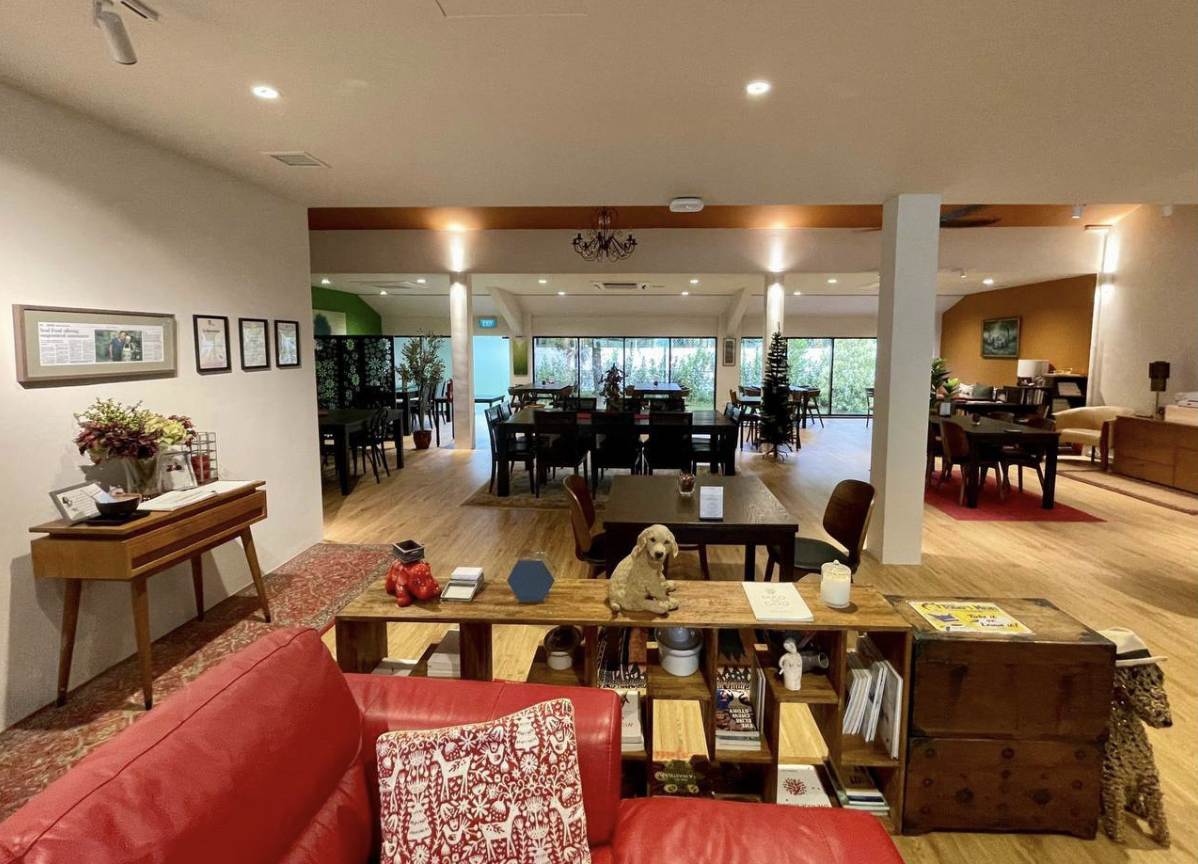
The warm & friendly interior of Soul Food Enterprise’s restaurant (Photo credit: Wafeeqa Sulaiman)
The restaurant’s cosy and welcoming environment reflects their philosophy to provide the best environment for their employees. Soundproofed spaces, gentle lighting, a spacious layout with a homely feel, and a fully electric kitchen to reduce sensory overload for employees were all intentional parts of Soul Food’s interior. This truly reflects the amount of thought that has gone into ensuring the space not only benefits the staff, but also the diners there.
When support turns into respect
Mr Png elaborated that for many guests, their shift in perspective often happens quietly, somewhere between the first interaction with the staff and the last bite of their meal. Some come in simply expecting to “support a good cause”, but they leave realising they have experienced something far more intentional and meaningful. Every dish, every service moment, and every experience in the restaurant reflects hands-on involvement from the team.
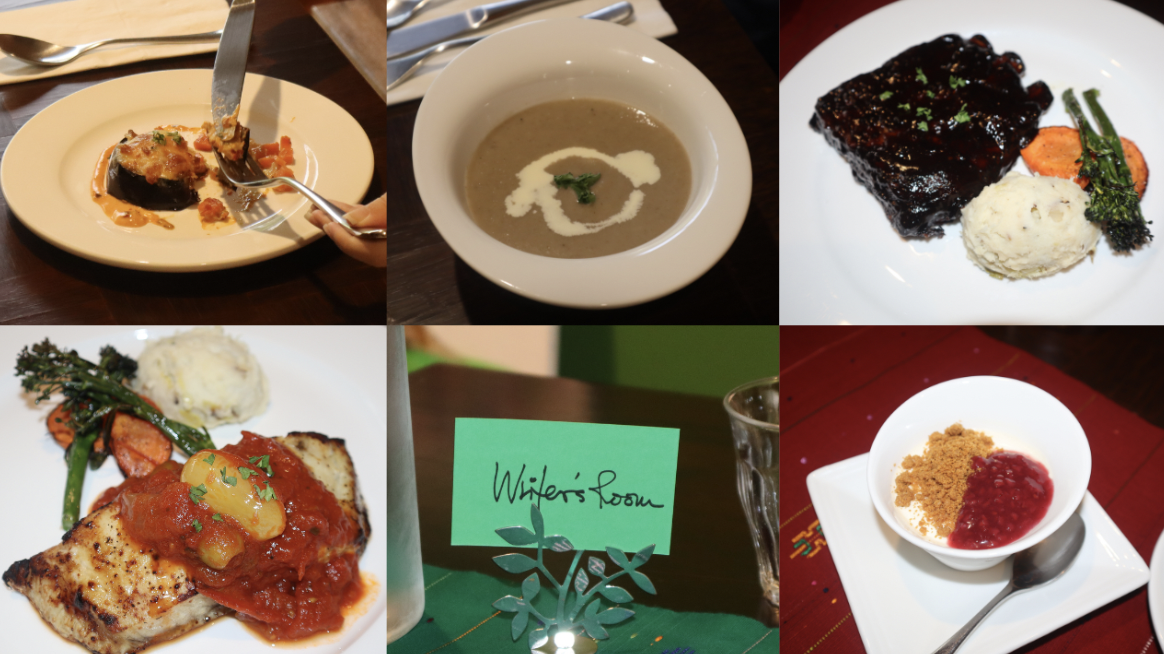
Soul Food’s Exclusive 18th Anniversary Lunch Menu (Photo Credit: Wafeeqa Sulaiman)
.
HYPE had the opportunity to taste Soul Food’s exclusive 18th Anniversary Lunch Menu, and it was nothing short of divine. Beyond flavour, each plate carried intention, embodying the owners’ belief that with the right support, differently abled individuals can thrive just as fully as anyone else in the culinary industry. There was a sense of care, patience and pride woven into every element of the meal, serving as a reminder that the work here was deeply skilled. Seeing staff members confidently performing both back-of-house and front-of-house duties offers a palpable sense of something rare: possibility. A quiet reassurance that with the right environment and support, meaningful work is not out of reach.
The Caffeine Experience: Brewing Second Chances
If Soul Food focuses on long-term belonging, The Caffeine Experience (TCE) centres on rebuilding structure and direction. They partner with The Yellow Ribbon Project to support individuals who have fallen through society’s cracks.
“I’m very good at failing,” founder Matthew Poh said candidly. “Bankruptcy, divorce, addiction, incarceration — I’ve been through all of it.” Rather than concealing that past, he draws strength from it. “Because I’m quite [an] expert in failing, when my boys [employees] face the same situations, I can advise them accordingly.”
The Caffeine Experience offers ex-offenders a place to start anew with a structured and supportive environment where mistakes are treated as part of the process, and growth is measured not just in technical skill, but in confidence and self-belief. As an ex-convict himself, Mr Poh finds it easy to empathise with those who walk through his doors looking for a second chance.
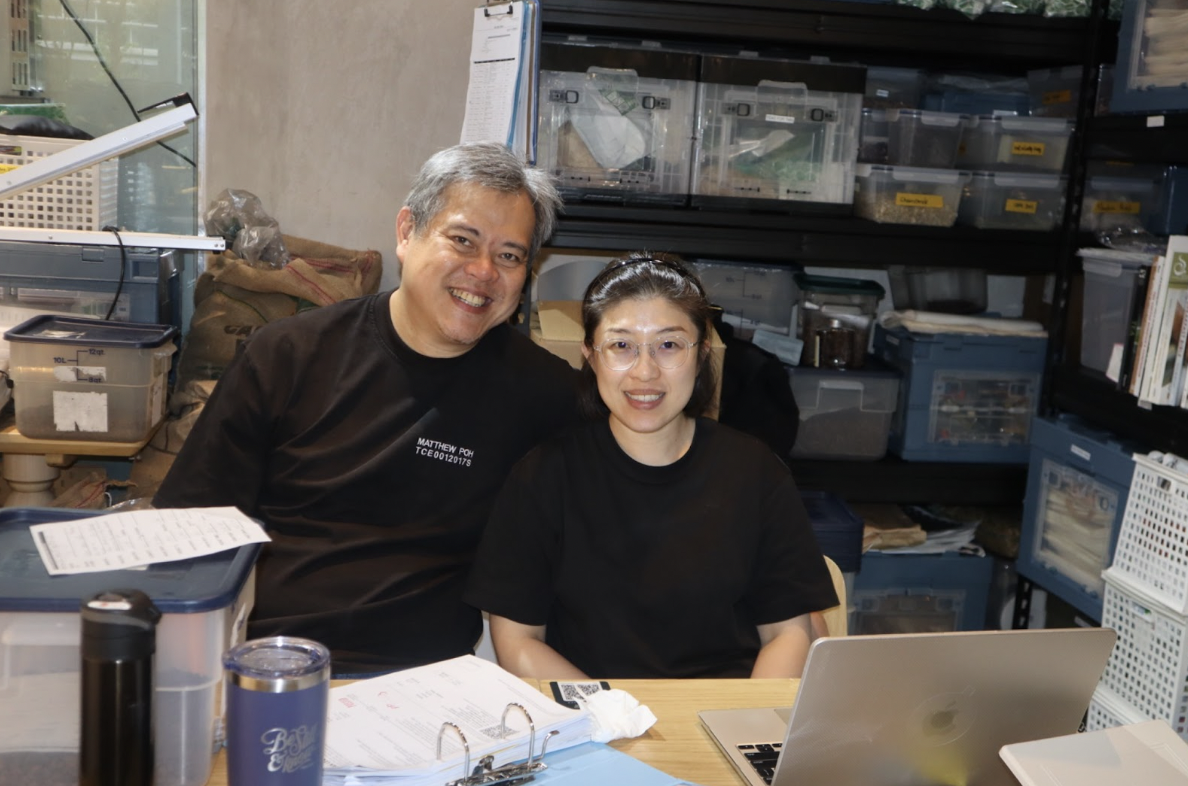
Owner Matthew Poh and his wife Hue Siew Yeun (Photo credit: Wafeeqa Sulaiman)
.
“Coffee is something you can learn easily,” Mr Poh explained, “but it takes about a year to master. That gives us a long runway.” Unlike volatile industries, the cafe business offers stability and a consistent rhythm where habits can be rebuilt.
From Setbacks to Skillsets
But the training goes far beyond just pouring cups of coffee, setbacks are expected. Relapse, self-doubt, and emotional volatility are all part of the process. “You don’t just tell them what to do,” Mr Poh shared. “You walk with them. You sit with them at their lowest points. And that takes years.”
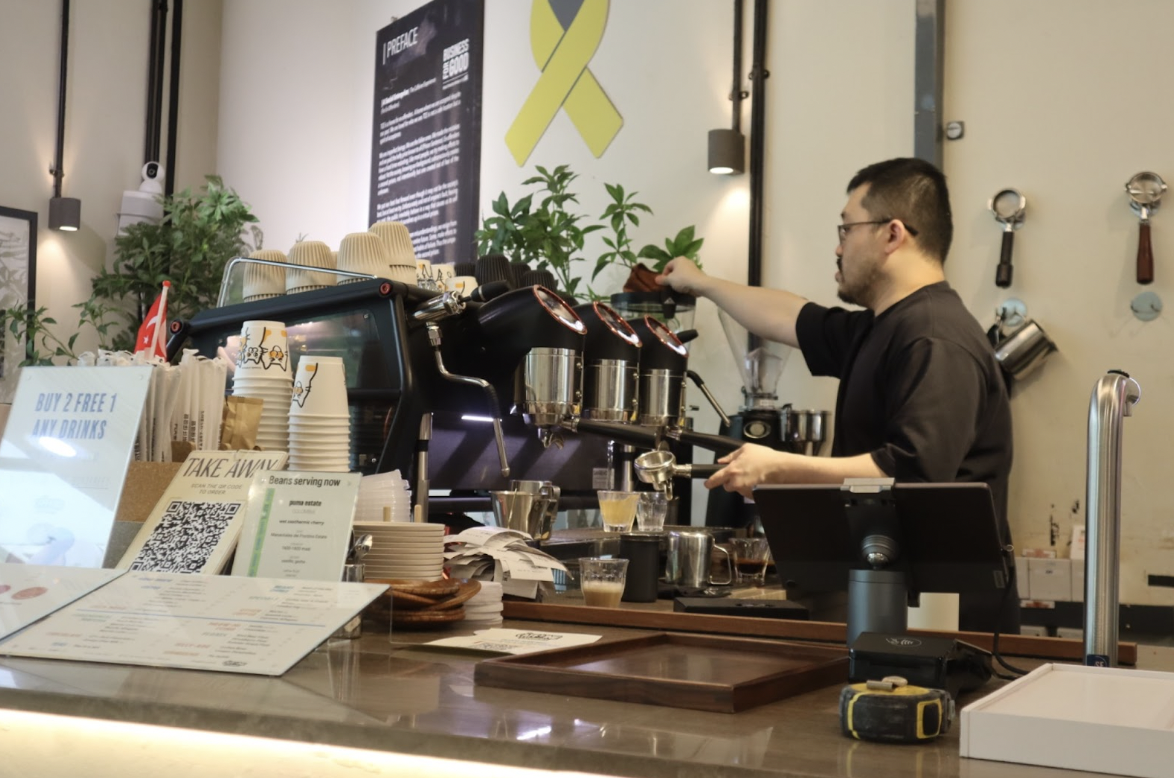
Mastering the machinery at The Caffeine Experience – practice makes perfect. (Photo Credit: Ashley Lok)
.
Employment plays a critical role in reducing reoffending. According to the Singapore Prison Service, Singapore’s two-year recidivism rate fell to 21.1 per cent in 2021, down from over 30 per cent two decades ago, underscoring the importance of stable work and structured support.
For those who pass through TCE, the impact can be life-changing. Mr Kevin Lim, a former barista at TCE shared, “They didn’t just teach me how to make coffee. They helped me become a better person, day by day.” After years of instability, he now works overseas, confident in both his skills and his sense of direction.
At TCE, success isn’t about keeping employees forever. It’s about helping them stabilise, move forward, and eventually outgrow the space. As Mr Poh put it, “If they leave and live a good life, then my job is done.”
Why These Spaces Matter
Both Soul Food and The Caffeine Experience operate under immense pressure — rising rentals, shrinking margins, and the emotional weight of caring deeply for the people they employ. Their success is not measured by scale, but by trajectory. People come in, find stability, and eventually move on stronger than before.
What these social enterprises offer Singapore is not charity. They offer proof that inclusive workplaces are possible, that dignity can be restored through trust, and that food and coffee can become tools for connection and change.
In a society that moves fast, these spaces remind us that sometimes, progress happens slowly. And sometimes, the most meaningful work begins simply by pulling up a chair, sharing a meal, and choosing to see people for who they can become.